

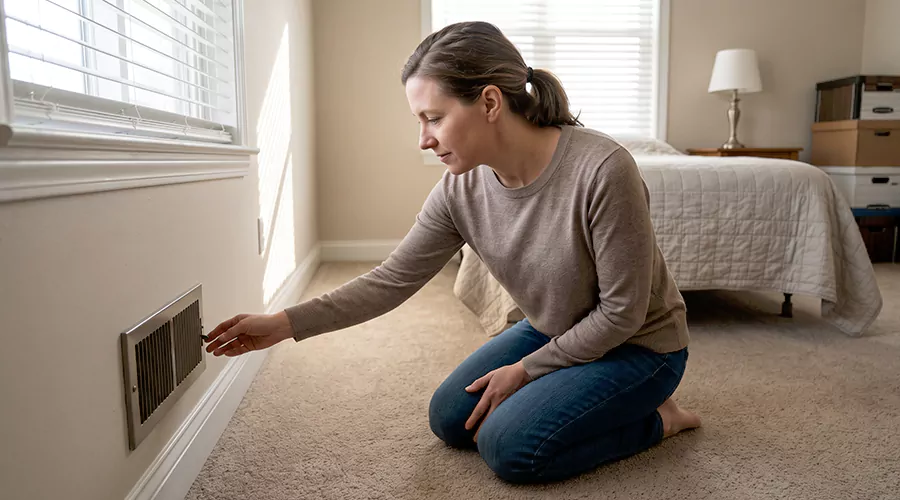
You generally should not close HVAC air vents in unused rooms because doing so can increase duct pressure, reduce system airflow, and potentially make your heating and cooling equipment work less efficiently. Although closing vents seems like a simple way to save energy, most conventional central HVAC systems are designed to distribute air through a specific network of open supply and return pathways.
Homeowners often close bedroom or guest room vents when those spaces are not occupied. The idea is that preventing conditioned air from entering an empty room will redirect it to occupied areas and reduce utility bills. However, forced-air systems do not necessarily respond that way. Restricting outlets can change pressure throughout the duct network, creating airflow problems in other parts of the home. Regular home ventilation cleaning can help remove accumulated dust and debris from ventilation pathways, supporting better airflow and indoor air quality.
Understanding how central HVAC systems distribute air can help homeowners make better decisions about comfort and energy use.
Does Closing Air Vents in Unused Rooms Save Energy?
Closing air vents does not reliably reduce heating and cooling costs. The U.S. department of energy (DOE) specifically identifies closing vents in unused rooms as a practice that can strain HVAC equipment and potentially increase energy consumption. A conventional central system continues operating according to its thermostat, equipment controls, and airflow design. Closing registers does not automatically reduce the amount of heating or cooling the equipment produces. Instead, the restriction may increase duct pressure, contribute to leakage, or reduce total airflow. The actual effect depends on the equipment and duct design, but closing rooms off is not a dependable energy-saving strategy.
What Happens When You Close an HVAC Vent?
Supply registers are openings where conditioned air enters a room. When a register closes, the available pathway for air becomes smaller. The blower must then operate against the resistance of the remaining duct network.
Possible consequences include:
| Potential Problem | What Happens |
|---|---|
| Increased duct pressure | Air encounters greater resistance |
| Reduced system airflow | Less air may move through the equipment |
| Increased duct leakage | More air may escape through existing gaps |
| Uneven room temperatures | Some rooms receive unsuitable airflow |
| Additional airflow noise | Open registers may whistle or rush |
| Cooling coil problems | Low airflow can contribute to freezing |
| Furnace temperature problems | Excessive restriction can contribute to overheating |
| Room pressure imbalances | Closed rooms may have inadequate air circulation |
Closing a single register does not automatically cause equipment damage. The concern increases when multiple outlets are restricted or the system already has inadequate duct capacity.
Can Closing Vents Damage Your HVAC System?
It can contribute to operating problems, particularly when airflow becomes severely restricted. Air conditioners require sufficient air moving across the evaporator coil. Inadequate airflow can contribute to coil freezing and reduced cooling performance. Heating systems also depend on appropriate airflow to carry heat away from the equipment. Excessive restrictions may contribute to high-temperature limit shutdowns. The DOE advises that closing vents can strain HVAC systems rather than produce the intended savings. A qualified technician can measure static pressure and determine whether the equipment is operating within the manufacturer's specifications.
Does Closing Vents Increase Duct Leakage?
Closing registers can increase pressure differences across parts of the supply duct network. If the ducts already have loose joints or gaps, pressure changes may cause more conditioned air to escape through those openings. Energy star reports that typical residential duct systems can lose approximately 20% to 30% of moving air through leaks and poor connections. Some of that air may escape into attics, crawlspaces, or other unconditioned areas. Repairing duct leakage is generally a more effective approach than closing outlets in an attempt to redirect airflow.
Should You Close the Door to an Unused Room?
Closing a door is different from closing the supply register, but it can still affect air circulation. Many homes have central return grilles in hallways rather than individual returns in every bedroom. When a bedroom door closes, supply air may have difficulty returning to the air handler. This can create a pressure difference between the bedroom and surrounding areas. DOE building america guidance recommends suitable return-air pathways, such as dedicated returns, transfer grilles, or jump ducts, where necessary. A properly designed return pathway allows a room to maintain air circulation even when its door is closed.
Can You Partially Close Air Vents?
Some adjustable supply registers can be used for minor comfort adjustments. Partially closing one register may have a limited effect, but adjusting several registers without considering system airflow can create undesirable restrictions. Professionally installed balancing dampers are designed to adjust airflow distribution within the duct network. A contractor should measure room airflow and static pressure before making substantial balancing changes. Avoid fully closing multiple registers as an improvised zoning method.
What About Rooms That Are Never Used?
A rarely occupied room still needs appropriate temperature and moisture control. During winter, allowing some spaces to become too cold can increase the risk of freezing pipes where plumbing is present. During warm, humid weather, insufficient conditioning may contribute to excessive moisture and condensation. The required conditions depend on the climate, insulation, building construction, and intended room use. Rather than completely shutting off supply airflow, consider having an HVAC contractor evaluate whether the room's delivered airflow can be adjusted safely.
Is HVAC Zoning a Better Option?
A properly designed zoning system can provide more control over temperatures in different areas of a home. Zoning systems use compatible thermostats, dampers, and control equipment to manage airflow according to heating and cooling demands. However, zoning is not equivalent to manually closing several supply registers. The system must account for minimum airflow, equipment capacity, and pressure limitations. A contractor should evaluate whether the existing equipment and ducts can support zoning before recommending installation.
Better Ways to Save HVAC Energy
Instead of closing air vents, focus on maintenance and building improvements that address energy loss.
Consider these practices:
- Use a programmable or smart thermostat appropriately.
- Replace dirty HVAC filters as directed.
- Seal significant duct leaks.
- Insulate ducts in unconditioned spaces.
- Keep supply registers and return grilles unobstructed.
- Seal air leaks around windows and doors.
- Improve inadequate attic insulation.
- Schedule equipment maintenance.
- Use suitable window coverings to control summer heat gain.
- Ask about professional airflow balancing when rooms are uncomfortable.
ENERGY STAR identifies duct sealing and insulation as useful improvements for homes with leaky heating and cooling systems.
How Can You Improve Comfort in Unused Rooms?
If an unused bedroom receives too much cooling or heating, begin by checking the thermostat location and room conditions. A contractor can measure the airflow entering the room and compare it with the room's heating and cooling requirements. The solution may involve adjusting a branch balancing damper, correcting duct sizing, or improving insulation. If the room is part of a properly designed zoned system, use its intended controls according to the manufacturer's instructions. Avoid making large changes that leave the equipment without enough airflow.
When Should You Call an HVAC Professional?
Arrange professional evaluation when several rooms have uneven temperatures or closing vents causes whistling, unusual equipment noise, or reduced airflow. An HVAC technician can inspect the duct network, measure static pressure, and identify balancing problems. The contractor should also evaluate return-air pathways and existing duct leakage. The objective is to improve room comfort while maintaining the airflow required by the equipment.
Conclusion
Closing HVAC vents in unused rooms is generally not an effective way to save energy. It can increase duct resistance, contribute to leakage, and create operating problems when too many outlets are restricted. Conventional central systems usually perform best when airflow pathways remain available and the duct network is properly balanced. Homeowners seeking lower energy bills should focus on thermostat settings, insulation, duct sealing, and professional airflow adjustments rather than routinely closing room vents.